table
{mso-displayed-decimal-separator:"\.";
mso-displayed-thousand-separator:"\,";}
tr
{mso-height-source:auto;}
col
{mso-width-source:auto;}
td
{padding-top:1px;
padding-right:1px;
padding-left:1px;
mso-ignore:padding;
color:black;
font-size:11.0pt;
font-weight:400;
font-style:normal;
text-decoration:none;
font-family:Calibri, sans-serif;
mso-font-charset:0;
text-align:general;
vertical-align:bottom;
border:none;
white-space:nowrap;
mso-rotate:0;}
.font82
{color:windowtext;
font-size:11.0pt;
font-weight:400;
font-style:normal;
text-decoration:none;
font-family:"Aptos Narrow", sans-serif;
mso-font-charset:0;}
.font83
{color:windowtext;
font-size:11.0pt;
font-weight:400;
font-style:italic;
text-decoration:none;
font-family:"Aptos Narrow", sans-serif;
mso-font-charset:0;}
.font87
{color:windowtext;
font-size:11.0pt;
font-weight:700;
font-style:normal;
text-decoration:none;
font-family:"Aptos Narrow", sans-serif;
mso-font-charset:0;}
.xl403
{color:windowtext;
font-family:"Aptos Narrow", sans-serif;
mso-font-charset:0;
vertical-align:middle;
background:#E2EFDA;
mso-pattern:black none;
white-space:normal;}
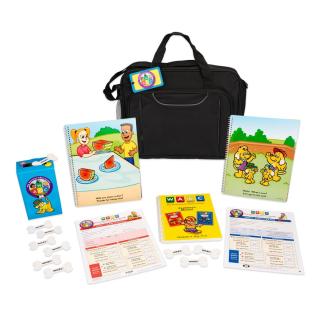
The Wiig Assessment of Basic Concepts (WABC) evaluates a child's use of basic concepts using a storybook format. The Wiig is a unique, norm-referenced assessment that can be used to: - create focused IEPs and intervention plans. - thoroughly assess basic concepts. - identify children in preschool and kindergarten who need "extra help" with basic concepts. - distinguish deficits in using basic concepts from deficits in understanding them. - further distinguish an inability to understand basic concept terms from deficits in auditory processing (following directions).
Age range: 2:6 - 7:11 years Publication date: 2004
Notice: Individuals should administer only those tests for which they have the appropriate training and expertise. This test requires a PRO-ED, Inc Level A qualification. |